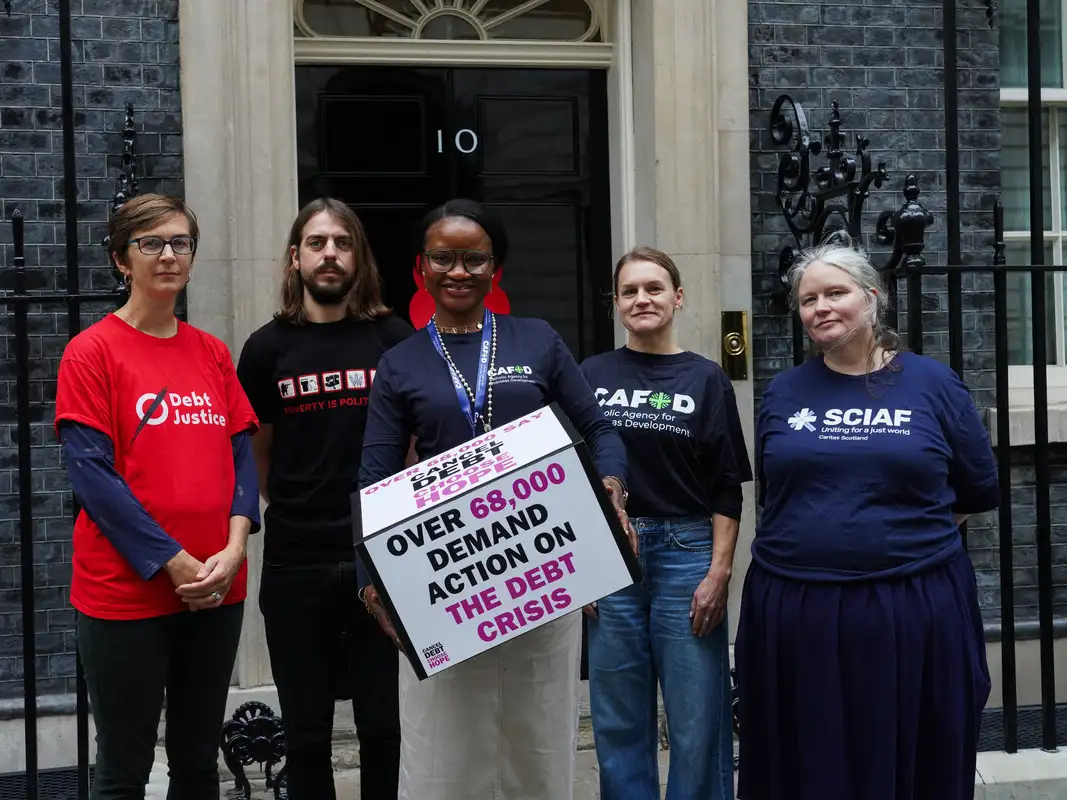
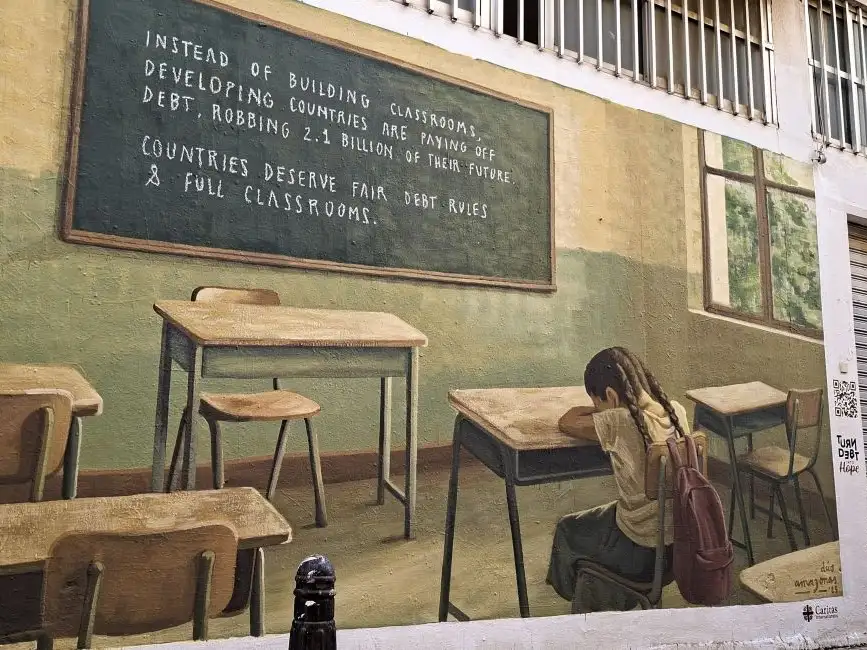
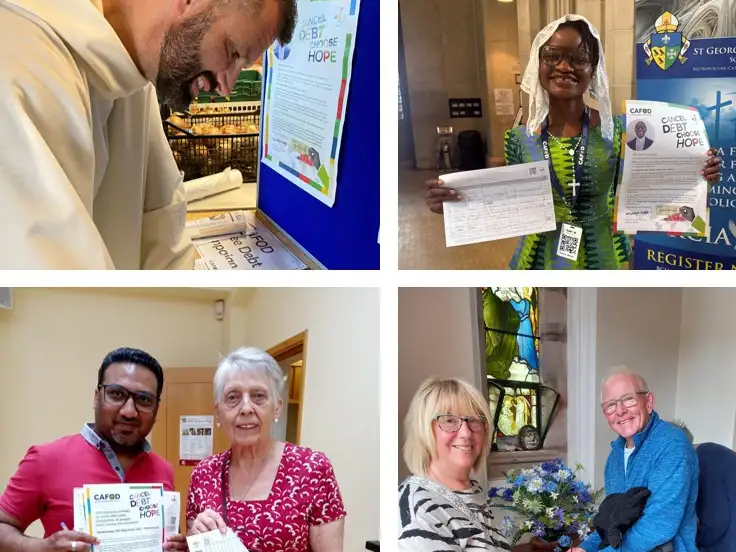
CAFOD's campaigning for debt and economic justice, and the work of our partners around the world, has long been sounding these same alarms. What the play grasps – and what orthodox development narratives have too often missed – is that poverty is not a natural condition waiting to be remedied by charity, but the product of a broken financial system.
Low-income and climate-vulnerable countries are haemorrhaging wealth to financial firms and multinational corporations headquartered in the Global North through debt interest payments, tax abuse and unfair trade deals. The post-war 'international development' project, born with the best of intentions, has coexisted with – and sometimes even reinforced – these systems that extract wealth from the Global South, rather than challenged them. Jo's journey from faithful participant to reluctant sceptic mirrors the journey CAFOD and others are calling on the British public to make: from sympathy to solidarity, and from alleviating the symptoms to addressing the root causes of poverty and inequality.
Political movements have always needed their stories as much as their arguments, and A Fine Idea makes the case for systemic change through story rather than statistics. Policy papers, however brilliant, speak to the already converted – but stories speak to everyone. This play takes the slow violence of debt and compound interest and the invisible machinery of an unjust and extractive global economy and makes it human. It gives it a face, a voice and a name. When Jo meets Kala, a Kenyan activist fighting for her country's future with her life, her worldview is transformed. The debt justice movement – which is asking people to care about compound interest rates and sovereign bond restructuring – needs theatre like this: art that makes the systemic feel relevant and the global feel personal.
This kind of storytelling has never been more urgent. As the UK approaches its G20 Presidency in 2027, Britain faces a defining choice: it can continue to preside over a system that extracts wealth from the poorest nations, or it can lead a low-cost, high-impact agenda to build something fairer and more functional.